

How to Host Wine Tasting Events at Home
Last Updated: November 19, 2026
Quick Summary
To host wine tasting events at home, choose one organizing theme, such as a single region or grape family, then limit your guest list to 8 to 12 people. Build a flight of four or five moderately priced wines, pour about one ounce each, and provide one clean glass per wine per guest plus a spare.
- Keep your theme specific enough to explain in one sentence.
- Cap a home tasting at 8 to 12 guests.
- Plan one clean glass per wine per guest, plus a spare.
- Pour roughly one ounce per taste so a five-wine flight fits a two-hour evening.
- Place a spit bucket at each end of the table and say spitting is welcome.
Table of Contents
- Planning Your Wine Tasting Event: Theme, Guest List, and Checklist
- Selecting the Wine Lineup and Sourcing on a Budget
- Setting Up the Space: Glassware, Tasting Mats, and Spit Buckets
- Running a Blind Wine Tasting Party at Home
- Wine Tasting Party Menu, Etiquette, and Non-Alcoholic Options
- Planning Your Next Tasting at Oliva Enoteca
- Frequently Asked Questions
Planning Your Wine Tasting Event: Theme, Guest List, and Checklist
Start with one organizing idea: a theme gives every bottle, snack, and conversation a reason to exist.
Choosing a Wine Tasting Theme
A strong theme narrows your choices to a few bottles that tell a coherent story. Good options include a single region such as Piedmont, a grape family like Sangiovese across several regions, or a style such as sparkling wines from different producers.
Keep the theme specific enough to explain in one sentence. "An evening through northern Italy" works. "Some nice wines" does not.
Building a Wine Tasting Event Checklist
Write the checklist before you send invitations, so you know your budget and headcount. A practical version includes:
- Guest count, with a realistic cap of 8 to 12 people for a home tasting
- Bottles, purchased or ordered in advance
- Glassware, water, bread or crackers, and spit buckets
Hosts often underestimate the glassware count. Plan for one clean glass per wine per guest, plus a spare.
Selecting the Wine Lineup and Sourcing on a Budget
Most hosts assume a good tasting requires expensive bottles. It does not. A well-chosen flight of four or five moderately priced wines teaches more than a single prestige bottle, because comparison is what makes differences visible.
Ask a local shop to recommend bottles that fit your theme and price range. Staff who taste regularly can often point you toward value wines from smaller producers, which tend to offer more character per dollar than famous labels.
Choosing the Wine Flight and Pour Sizes
Arrange wines from lightest to fullest body, so delicate whites and rosés come before tannic reds. Pour roughly one ounce per taste, which lets a five-wine flight fit comfortably within a two-hour evening.
Serve a palate cleanser such as plain bread or water between wines that differ sharply in style. Sparkling wine first is a common choice because it refreshes the palate for what follows.
Setting Up the Space: Glassware, Tasting Mats, and Spit Buckets
Set the table before guests arrive.
A spit bucket matters more than hosts expect. Guests who taste five wines and swallow every one can feel uncomfortable by the end.
Keep the room cool and free of strong scents. Candles and fresh flowers can compete with aromas, so save them for after the tasting.
The table setup comes down to a few essentials, summarised below.
| Item | Value | Note |
|---|---|---|
| Glasses per guest | One per wine, plus a spare | Plan for the full flight |
| Guest count | 8 to 12 people | Realistic cap for a home tasting |
| Spit buckets | One at each end of the table | Spitting is normal and welcome |
| Glass placement | At each seat | Numbered card or tasting mat beside it |
Running a Blind Wine Tasting Party at Home
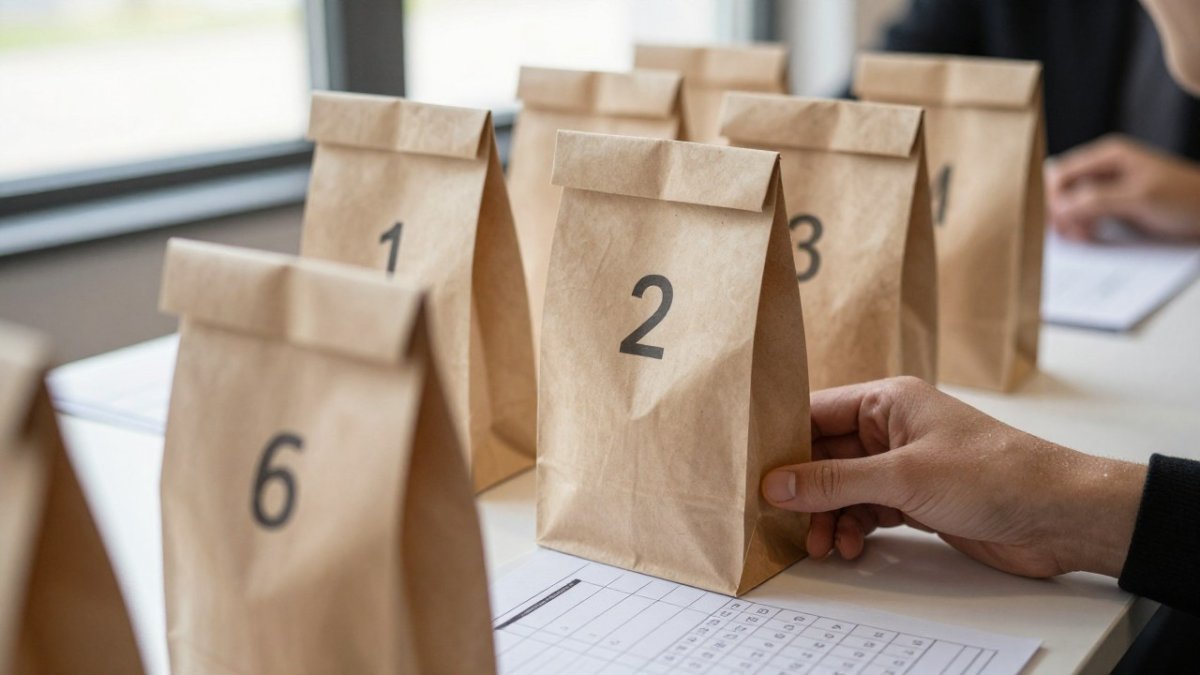
A blind tasting hides the bottle labels, which turns the evening into a guessing game and removes brand bias. It is one of the most engaging formats among wine tasting events for a home party, and it is also the cheapest to run because the wine, not the label, does the talking.
Setting Up the Blind Flight
Wrap each bottle in a paper bag or foil, number it, and record the order privately on a sheet only you can see. Pour in sequence and let guests write observations before the reveal.
A common pattern is to run two short flights rather than one long one: three whites or light reds, a ten-minute break with bread and water, then two fuller reds. The break resets palates and gives quieter guests a chance to talk.
Watch out: if you bag the bottles the night before, condensation and handling can smear the numbers. Number the bags, not the bottles, and keep a master key in your pocket.
The 5 S's Method, Step by Step
Guide guests through five steps for every wine: see, swirl, smell, sip, and savor. The method works because it slows people down and gives them language for what they are experiencing.
- See. Hold the glass against a white background, a plain napkin or tasting mat works. Note color and clarity: is a white pale straw or deep gold? Is a red ruby or garnet at the rim? Color hints at grape and age and gives guests their first observation.
- Swirl. Swirl on the table for beginners, or in the air for the confident. Swirling exposes more surface area to air and releases aromas.
- Smell. Smell twice before you sip. The first sniff catches the strongest note; the second, after a short pause, often reveals something underneath, citrus, earth, pepper, or oak. Ask guests to say the first thing that comes to mind.
Scorecards That Actually Get Used
A simple scorecard works better than a complicated one.
For the reveal, unbag the bottles one at a time and read a few guesses aloud. The gap between what people smelled and what they were actually drinking is usually the funniest part of the night.
Wine Tasting Party Menu, Etiquette, and Non-Alcoholic Options
Most guides treat the menu and guest list as afterthoughts. In practice, they decide whether a tasting succeeds, because the food, pacing, and whether every guest feels included determine how the room feels by the second flight. When food, pacing, and inclusion shape the room, a step-by-step guide can help turn those choices into a tasting that feels cohesive from the first pour to the last.
A Menu That Supports the Wine
Keep food simple and neutral. Cheese, cured meats, bread, and fruit suit most flights, and they help guests reset between pours. Avoid heavily spiced or sweet dishes, which can dull the wine and make even a good bottle taste thin.
A few pairings that work across most flights:
- Sparkling wine: salty hard cheese such as aged cheddar or Parmigiano, plus plain crackers. Salt and bubbles reinforce each other.
- Crisp whites: soft cheese such as chèvre or a mild brie, green apple slices, and almonds.
- Light reds: cured meats such as prosciutto or salami, olives, and a crusty baguette.
Set the food on one side of the table so guests can reach it without knocking glasses. Replenish bread and water between flights; they are the palate cleansers that keep the tasting moving.
Budget-Friendly Sourcing
Ask a local shop to recommend bottles that fit your theme and price range. Staff who taste regularly can often point you toward value wines from smaller producers, which tend to offer more character per dollar than famous labels.
Set a per-bottle ceiling before you shop and hold to it. Most hosts find a flight built around one splurge bottle and four value bottles creates more conversation than five mid-priced bottles, because the splurge gives the group a reference point.
Etiquette That Makes the Room Comfortable
Good etiquette is mostly about making people comfortable. Introduce guests by name and a shared interest, invite quieter people into the discussion, and avoid pressuring anyone to finish a pour. Spitting is normal and welcome, say so at the start, and place a spit bucket at each end of the table.
A few habits that keep a tasting friendly:
- Pour for guests rather than letting them serve themselves, so pours stay even.
- Ask before refilling a glass; a half-finished pour is a signal, not a mistake.
- Keep the conversation on what people smell and taste, not on who is right.
Non-Alcoholic Options That Belong in the Flight
Offer non-alcoholic options too, and treat them as part of the tasting rather than a consolation prize. Sparkling water, good-quality juices, and alcohol-free sparkling drinks let every guest take part in the toast and the tasting.
Build one non-alcoholic pour into each flight, a dry alcohol-free sparkling wine alongside the sparkling course, or a verjus-based spritz alongside the whites.
alcohol-free wine and spirits guidance
Planning Your Next Tasting at Oliva Enoteca
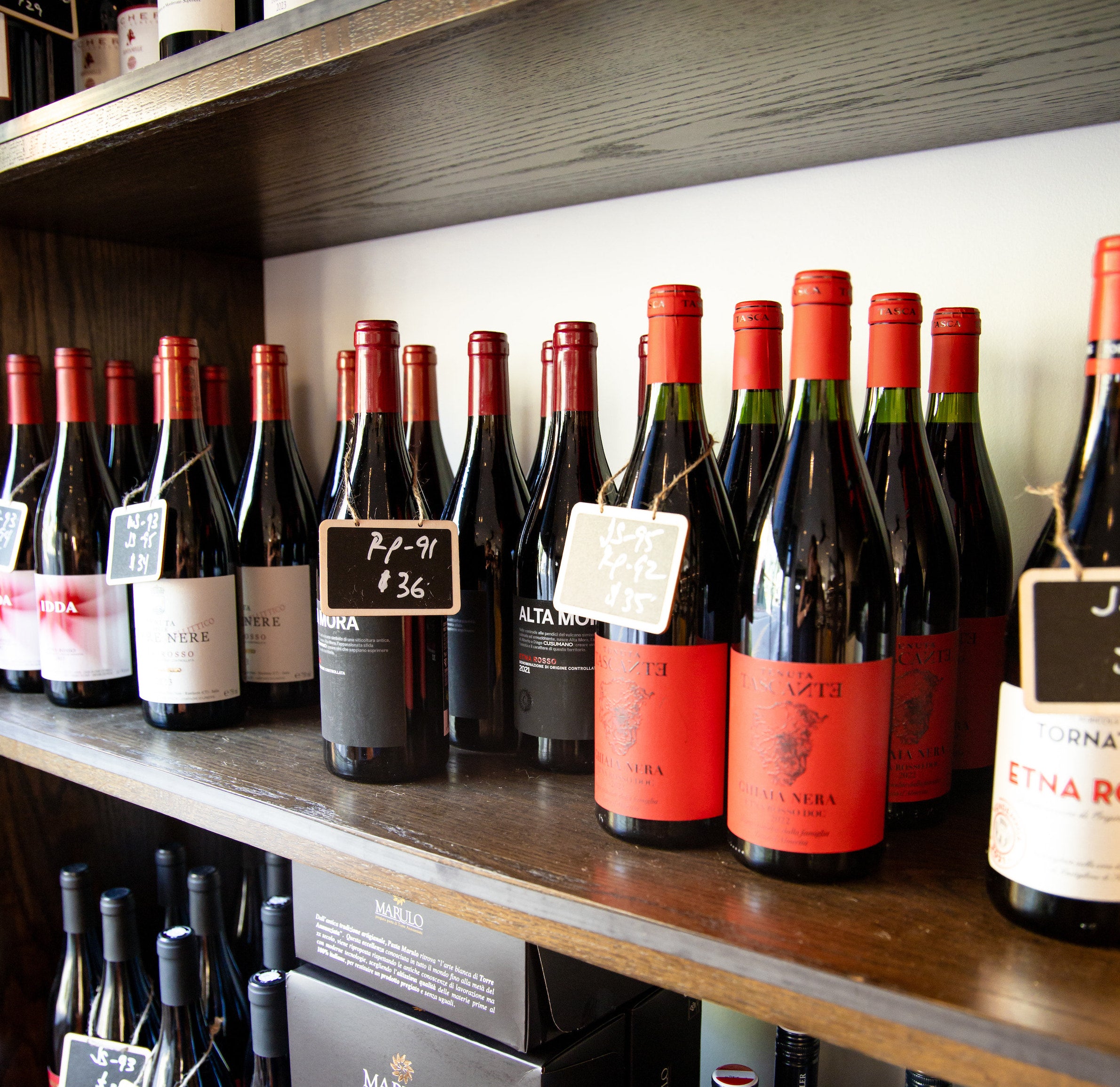
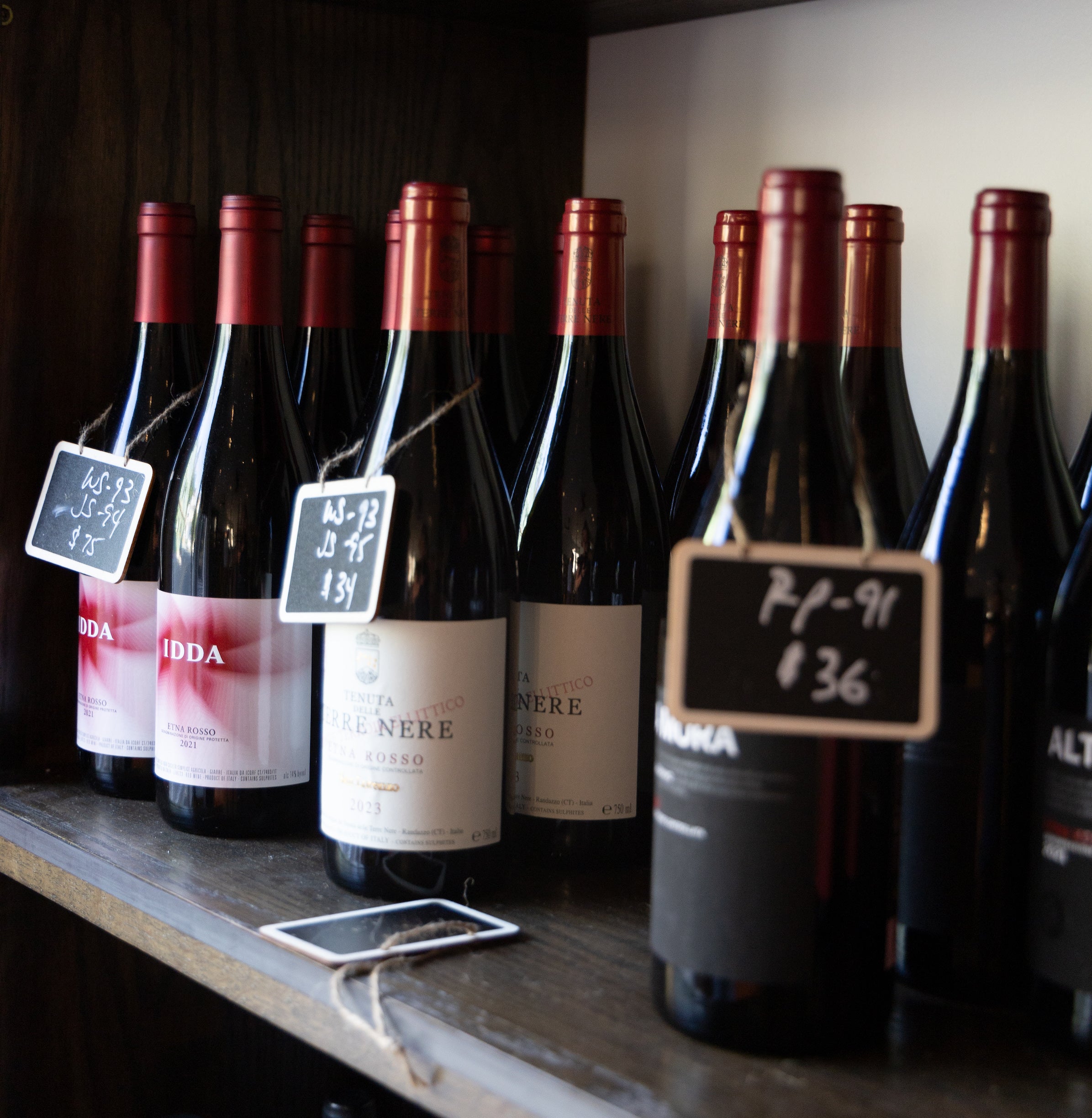
If you would rather spend the evening tasting than sourcing bottles, our weekly events in Manchester-by-the-Sea are designed for exactly that.
For hosts who want to build their own lineup, the Essential Italian Wine Club delivers three ready-to-enjoy bottles every other month. Browse the Oliva Premium Club to explore Italian varietals and regions.
Ready to plan your own evening? Start with a theme, lock in your guest list, and order your bottles early.
Frequently Asked Questions
What are the 5 S's for wine tasting?
The 5 S's are see, swirl, sniff, sip, and savor. Look at the wine's color and clarity, swirl the glass to release aromas, sniff deeply to identify fruit, floral, or earthy notes, sip a small amount and move it across your palate, then savor the finish, which is how long the flavor lasts after swallowing. Guests can follow these steps in order at each pour, and a simple scorecard lets them note what they noticed. Using the same sequence for every wine keeps comparisons fair, especially in a blind wine tasting party at home.
How many bottles of wine do I need for a tasting party?
For a tasting with six to ten guests, plan on one bottle per wine in the flight, typically four to six wines. Pours of about one ounce per wine are standard, so a 750 ml bottle gives roughly eight to ten tasting pours. Keep a few extra bottles for guests who want seconds on favorites. Oliva Enoteca's Coming soon! wine tasting event listing at $20.00 is one way to skip the sourcing work.
How do I set up a blind wine tasting at home?
Pour each wine into a numbered glass or wrap the bottles in opaque bags so guests cannot see the labels. Keep the flight order the same for every guest and write the number on the tasting mat. Ask guests to record their guesses for varietal, region, and vintage before revealing the bottles. A host who knows the wines should avoid hinting at them. Blind formats work especially well for guests who think they dislike a style they have never tasted without a label.
How do I plan a wine tasting party menu on a budget?
Choose simple foods that do not overpower the wine, such as cheese, cured meats, bread, olives, and fresh fruit. Plan about four to six ounces of food per guest. Include a palate cleanser like plain crackers or water between flights. Offer a non-alcoholic option, such as sparkling water, so every guest has something to sip alongside the tasting.
